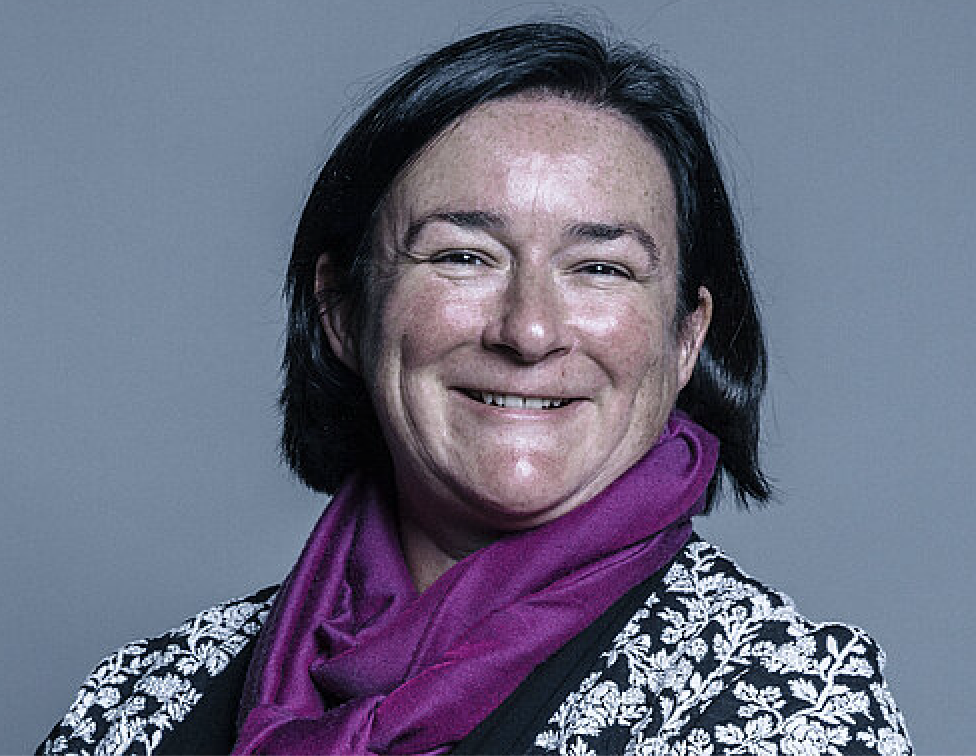
Vince Cable on the Liberal Democrat Fairer Future Economic Recovery Plan

Written by Vince Cable MP on 30th September 2008 – 10:45 am

Gordon Brown’s response to the economic crisis has been too little, too late.

For years I warned him of the oncoming economic problems. Unsustainable levels of personal debt, mostly secured against the illusory ‘wealth’ of rising, vastly inflated property prices. An economy based so heavily on debt was never going to be in a fit state to deal with global shocks like the credit crunch.

And so it has proved. Gordon Brown is now facing the consequences of his years of inaction. The housing bubble has burst. Unemployment is rising fast. Tens of thousands of families are losing their homes.

With people struggling with massive debts and fast rising bills it is now almost inevitable that the UK is heading for recession. Gordon Brown used to boast we were better prepared than our competitors for a downturn. Yet the OECD’s respected economic forecasters now predict we will fare worst among the world’s seven leading economies (G7) in the current crisis.

What Britain needs now, and urgently, is practical action to help people who are struggling – to put money back in their pockets, to cut their energy bills, and help them keep their homes.

Gordon Brown and Labour can’t offer that. They got us into this mess. Now they are veering between complacency and panic. Dithering on key decisions, muddling along on half measures.

David Cameron and the Conservatives won’t offer it. At a time when those on the breadline are struggling more than for a generation, their top priority is tax cuts for millionaires.

It’s not good enough to just keep muddling along and hoping.

We need a serious plan to get Britain’s economy up and running again.

That is why Nick Clegg and I have put together the Liberal Democrat Fairer Future Economic Recovery Plan.

Our plan would:

  • Put more money in people’s pockets - tax cuts for people on low and middle incomes,
  • Stop unnecessary home repossessions and provide more affordable housing,
  • Make energy companies reinvest their windfall profits in cutting bills, and
  • Deliver extra help for people in debt or who lose their jobs.

And we will bring the free-wheeling, ‘anything goes’ short-termism of the City to an end. We cannot continue with a culture where bankers pocket big bonuses for taking reckless risks, but when things go wrong government and taxpayers have to step in to pick up the pieces.

Please read the summary of the plan, and share it with other people you know.

There is only one party in Britain today with a serious and credible plan to get Britain’s economy back on its feet – and to provide real help to those struggling in the meantime.

That is the Liberal Democrats.

Share and Enjoy:
  • Digg
  • del.icio.us
  • Facebook
  • Google
  • StumbleUpon
  • TwitThis
  • E-mail this story to a friend!

Posted in Op-eds | 15 Comments »

Opinion: A million doors or a moral vacuum?

Written by Simon Titley on 29th September 2008 – 9:35 am

Fifty years ago, the Labour MP for my home town of Lincoln was Geoffrey de Freitas. In those days, Lincoln was a very safe Labour seat and Geoffrey de Freitas was a very wealthy man.

In common with many MPs of that era, de Freitas did not maintain a home in his constituency (a practice that at least had the merit of incurring no controversial expense claims). Indeed, he spent little time in his constituency at all. On the rare occasions he paid a visit, he and his wife would get in the Rolls Royce and drive north to Lincoln, his chauffeur following in a Morris Traveller. When the convoy reached the constituency boundary, it came to a halt. Mr and Mrs de Freitas would get out of the Rolls and into the Morris, and make a suitably modest entry into the city. The chauffeur followed at a discreet distance in the Rolls.

I was reminded of this story by the Liberal Democrats’ constant refrain throughout Make it Happen (.pdf) and the Million Door Challenge about the need for politicians to “listen”. The recent cold-calling debacle and last year’s ‘Community Canvass Week’ were based on a similar premise. But is this really the problem?

Far from politicians not listening, they have never listened more. In the 1950s, most MPs – not just Geoffrey de Freitas – put in only token appearances in their constituencies, while local councillors were never seen from one election to the next. Yet electoral turnouts and party memberships were at an all-time high. Nowadays, most elected politicians conduct regular surgeries and carry unprecedented loads of casework; they are accessible online via e-mails, websites and blogs; they deliver leaflets and appear regularly in various local media; and they conduct frequent surveys and polls. Today, a politician with Geoffrey de Freitas’s hauteur would not even get selected, never mind elected. Yet people still moan that politicians are “out of touch”.

There is clearly a widespread sense of powerlessness and alienation but, given all the listening that is going on, it is doubtful that more of it is the solution. Might the real problem lay elsewhere?

To find out why people feel so alienated, it is worth studying the conclusions of the Power Inquiry (.pdf), published by the Joseph Rowntree Reform Trust in 2006, which examined why people are disengaging from democratic politics. This report found that the underlying cause of disengagement is social change, a shift to a post-industrial society in which voters are less deferential, better educated and no longer feel bound by traditional class loyalties. Notably, a significant factor behind people’s disillusionment is a feeling that “political parties and elections require citizens to commit to too broad a range of policies.” In other words, in our atomised society, people are less willing to make compromises and unrealistically expect a bespoke offer from their politicians. This chimes with the analysis of the effects of consumerism on politics in my essay in Reinventing the State.

To remedy the situation, the Rowntree report makes several recommendations. These do not include knocking on a million doors, having nothing to say and merely asking people what they want. (For a more detailed criticism of the ‘Liberal Democracy = asking them what they want’ school of thought, see my article in Liberator (April 2008), pages 8-9 - .pdf). In fact, ‘listening’ campaigns such as the ‘Million Door Challenge’, ‘Community Canvass Week’ and cold-calling do more harm than good:

  • They fail to empower people but instead encourage the idea that voters are merely supplicants.
  • They foster the expectation that politicians can satisfy millions of individualised wants simultaneously, when politicians’ inability to do so is at the root of popular disillusionment with the whole democratic process.
  • They assume that public opinion is fixed and deny the party any confidence in its ability to change people’s minds.
  • They fail to establish a clear brand image, the lack of which is the Liberal Democrats’ biggest handicap. Instead, by ducking moral choices and avoiding clear statements of values, they make the party’s image even vaguer.
  • By failing to establish moral clarity, they contribute to the widespread sense that all the main parties look the same (the Rowntree report identified as a major cause of alienation the fact that “the main political parties are widely perceived to be too similar and lacking in principle”).

And anyway, these superficial consultation exercises ought to be redundant in a party that practices community politics as it was originally intended. Surely all our activists are already genuinely empowering people as part of their year-round campaigning. Aren’t they?

It would be bad enough if the ‘Million Door Challenge’ were just a vacuous marketing exercise. In the current political climate, it is obscene. The financial markets are on a precipice, the war in Afghanistan is being lost, the Arctic ice cap is shrinking, and all the party can say is, “Dunno, mate, you tell me.”

Running on empty is not a serious option. Politicians of all parties must stand for something, not blow with the wind. Their job is to lead, not follow; to persuade, not accept public opinion as a given. This does not mean being arrogant. Politicians should engage in debate and connect with people’s concerns. But they can do this effectively only if they have a clear sense of right and wrong, and they should not be afraid to communicate that moral clarity to the electorate. The people have the right to elect or reject them on that basis. But any politician who has no idea of what he stands for and instead can only ask “you tell me” is unfit for office.

My advice to Liberal Democrat activists is to ignore the empty ‘Million Door Challenge’ and not attempt to communicate with the electorate unless they have something worth saying. They would do better to emulate, for example, the clarity and rigour of Vince Cable’s bold statements on the economic crisis, or the passion of Henry Porter’s speech about freedom at the recent Liberal Democrat conference rally.

My advice to any unfortunate voter on the receiving end of the ‘Million Door Challenge’ would be to ask the canvassers on your doorstep one simple question: “What do the Liberal Democrats stand for?” If they cannot provide a clear answer, a short message about sex and travel is in order.

Simon Titley is a Liberal Democrat activist who helps write and produce Liberator magazine.

Share and Enjoy:
  • Digg
  • del.icio.us
  • Facebook
  • Google
  • StumbleUpon
  • TwitThis
  • E-mail this story to a friend!

Posted in Op-eds | 15 Comments »

Jonathan Fryer’s Diary of a Euro-candidate

Written by Jonathan Fryer on 25th September 2008 – 10:57 am

Wednesday

On the tube over to West London, I wonder how Ukraine and Slovakia have managed to have their national celebrations on the same day, and both at lunchtime. Fortunately the two embassies are close to each other, and predictably there is a lot of toing-and-froing between. I decide to do Ukraine first, having recently been in the country itself and I am not surprised to find the mood somewhat sombre. After the Russian intervention in Georgia, there are rumblings in the Crimea again and the government in Kiev is falling apart. I have earnest discussions with the diplomats there, but it’s a relief to go on to the Slovakian event, where a fantastic chamber orchestra is playing wild central European music and the food is terrific.

Thursday

To Westminster Abbey for a book launch, in the wonderful Jerusalem Chamber – a nook that the tourists never get to see. The author of the tome, the Archbishop of Galilee, isn’t actually there, but I link up with Jafar Farah, Director of the Mossawa Advocacy Centre for Arab Citizens of Israel, whom I’d met briefly in Parliament yesterday. Palestinian Arabs make up about 20 per cent of Israel’s population, but they are often the forgotten people in the Middle East conflict. Many of these Arab Israelis are Christians – Jafar is a Maronite – and some of the Churches in Britain have been doing what they can to foster constructive dialogue between different faith groups in the Holy Land.

Friday

Lunch with the BBC World Service’s new political correspondent Nick Childs, so I can brief him about the upcoming Bournemouth conference. Europe will be a major item on our agenda at Bournemouth, but the LibDems and UKIP seem to be the only people actually talking about it in the run-up to next June’s elections. Labour are too busy trying to persuade the public they are united behind Gordon Brown, while individually stabbing him in the back, and their poll ratings are in free-fall. In the evening, I give my third talk of the week to non-party-political groups, this one being to the Sutton Writers’ Group. They invited me to speak about my work as a writer and journalist. I tell them that after I had spent four years studying Chinese and Japanese, Reuters promptly sent me to Brussels, which always gets a laugh.

Saturday

The skies lift as the train approaches Bournemouth. By the time I’m installed in the hotel the weather is positively balmy. Seven of us from the ‘In It to Win It’ group of European candidates who would be most likely to form the new intake next year gather to exchange notes and plot how we can make the party take the European campaign seriously for once. Well, both Nick Clegg and Ed Davey have said that it will, so that’s a start. Later, I’m almost first in the door at the London regional reception, more by accident than design. At least this means I get some olives. The place soon fills up and I give a little pep talk. Looking round the room, I realise I know almost everyone there, but as I have been hurtling round London like some demented clockwork mouse for the past five years, I should do!

Sunday

My European dedication is proved by managing to be in the conference hall at 9.45 on a Sunday morning to watch the presentation given by ALDE, the European Liberal group of MEPs, choreographed by Graham Watson. Part of it is a video shot in the Brussels parliament building last month showing our LibDem MEPs at work. I happened to be there the day the cameras were filming, so I appear on screen a couple of times, as if I had already been elected. If only! At lunchtime, Nick Clegg hosts a reception for MEPs and Euro-candidates and he once again pledges to fight the European campaign on European issues, particularly highlighting the environment. Nick, we’ll be watching you!

Monday

The BBC breakfast is always a bit of a bun-fight; I think the only reason I really go is nostalgia for all the years I worked in Bush House. The World Service has just shut down the Romanian Service, the last of its European language services, which makes me sad. But on the up-side, a Persian language TV channel is going to be launched this autumn. We’re shown some promotional clips and the new channel’s cultural correspondent looks far wilder and more interesting than anyone on British domestic TV.

Tuesday

At lunchtime I have do something I’ve always told myself I’d avoid: speaking at two fringe meetings which are scheduled simultaneously. So I open the first one (on Islam Today) with a carefully-timed seven minute presentation, and then have to run before the next panellist, Lee Jasper, gets to open his mouth. It’s more subdued at the Heritage Lottery Fund fringe on Britishness, where broadcaster Wesley Kerr is in the chair. I talk about my onion skins: being a Londoner (albeit an adopted one), who is British and also European, and quite comfortable with all three layers. Simon Hughes then turns up even later than me, and of course announces that he is English, Welsh and a little bit Irish too. I grab a couple of Heritage sandwiches and proceed to the conference hall, where I am called to speak in the Europe debate. The adrenalin is running and I end by shamelessly plagiarising Dylan Thomas, ‘Do not go gentle into this good fight. Rage, rage against the Euro-sceptic right!’

Jonathan Fryer is a writer, lecturer and broadcaster, and is second on the party’s list for the European Elections in London in 2009.  His blog has featured on Lib Dem Voice’s Golden Dozen lists over a dozen times.

If you’ve had an interesting week, why not write a diary for Lib Dem Voice?  Details for contributers are here.

Share and Enjoy:
  • Digg
  • del.icio.us
  • Facebook
  • Google
  • StumbleUpon
  • TwitThis
  • E-mail this story to a friend!

Posted in Op-eds | 1 Comment »

Opinion: Clegg half-way there on tax cuts

Written by Tom Papworth on 24th September 2008 – 6:20 pm

The Liberal Democrats made a significant step forward at their Conference last week when we passed the Make It Happen policy paper.

The main issue of the debate revolved around Nick Clegg’s pledge to cut billions of pounds from the income tax of low and middle income families. The party has broadly welcomed this, though many have accepted it only as long as it is accompanied by a promise that the overall tax-take will remain the same, and that richer people should shoulder more of the tax burden.

This redistributionist error was sadly reinforced by Clegg himself in an otherwise excellent interview with The Times, in which he said:

Economically it makes no sense when you are heading into recession to give tax cuts to the better off because they will just save them. You have to give them to people on lower incomes who will transfer them into consumption on food and fuel.”

In this he is half-right. Wealthy people do save additional income, whereas poor people spend it. Right now, who wouldn’t love to squirrel away spare money into an ISA so that they have something in reserve? But when your children are growing out of their shoes, or you haven’t had a holiday in three years, you are more likely to spend a few hundred quid in tax relief than save it. On this point, at least, Nick is correct.

Unfortunately though, there is no long term prosperity as a consequence of such a policy. Rather, it is based on one of the most fundamental economic fallacies: one of which the leaders of all three political parties – and even (dare I say it?) Vince Cable – are guilty. This is the assumption that consumption drives growth.

This is utter folly. Consumption is important to a healthy economy, but growth can only be achieved through investment, and investment is a euphemism for saving. And it is growth, not redistribution, that is the real root to prosperity.

Growth averaging just 3% per annum will double household incomes within a generation. By comparison, there is no level of redistribution that could double the household incomes of the majority of the population.

To put it another way, the only way that real wages can rise is if the productivity of workers rises. This requires investment in new plant machinery, new IT solutions and training for employees. This can only come from companies and investors. In addition, this productivity rise makes consumer goods cheaper (which is the equivalent of making consumers richer) and creates new jobs (as productivity overtakes wage costs) so that unemployment is reduced.

So while Nick is right to say that “the better off … will just save [tax cuts whereas]… people on lower incomes … will transfer them into consumption” he is utterly wrong to say that “Economically it makes no sense”. Economically, it is vital.

Politically, however, tax cuts for businesses and entrepreneurs are unpalatable. Our party, much like the other two, often suffers from the reactionary instinct of “something must be done”; yet while noble sentiments lead Liberal Democrats to want to tackle poverty urgently, we should consider how these goals are best served through overall increases in prosperity. The long term interests of everyone in society – and of the poorest most of all - are best served by tax cuts that will ensure that our children are twice as prosperous – that their lives are twice as easy – as ours. Temporary relief is no substitution for such prosperity.

Scepticism over such tax cuts at least recognises the political realities of the 21st century. No matter how correct the economics, it would be impossible to implement tax cuts solely for businessmen and companies, because the vast majority of voters would understandably ask why their taxes are not being cut while those of £billion businesses and rich oligarchs are.

What is needed, therefore, is a sort of liberal realism that recognises that lowly paid workers, who form the bulk of the electorate, will want to see some of the short-term gain that their richer peers will enjoy as they wait for the longer term growth-benefits to kick in. One might suggest that a little honey today keeps us sweet until tomorrow’s jam arrives.

So Nick Clegg and Vince Cable are half-right to advocate tax cuts for those on low and middle incomes. These are indeed vital, not primarily as poverty-reduction tools but as symbols of the fairness that the party holds so dear. These in turn will buy support for the tax cuts that will make a real difference to the prosperity and so the lives of every person in this country (and to the poorest most of all): tax cuts for businesses, investors and entrepreneurs.

The great lesson of liberalism is that it is not only from one’s own wealth or prosperity that one can benefit, but also from that of others. To put it another way, it is not from benevolence that we expect our dinner, but from others’ regard to their own interest.

The Lib Dems were right to cut taxes for the poor. Now, for the benefit of the poor most of all, it is time to cut taxes for the rich as well.

* Tom Papworth blogs at Liberal Polemic, where (he tells us) “you can read a more in-depth explanation of the relationship between tax cuts, investment and prosperity for all”.

Share and Enjoy:
  • Digg
  • del.icio.us
  • Facebook
  • Google
  • StumbleUpon
  • TwitThis
  • E-mail this story to a friend!

Posted in Op-eds, Party policy and consultation | 34 Comments »

Opinion: Why the party shouldn’t be auto-phoning people

Written by Hywel Morgan on 19th September 2008 – 9:56 am

The plan for the Lib Dems to phone 250,000 people on Wednesday evening, after the conclusion of the party conference, has attracted some criticism both inside and outside the party.

If this is the big idea to come back from sending people to the US Democrats’ Convention then I’m not sure the flights were worth it. Automated phone messages were used in the 2000 Presidential election and possibly before in America. I may not have been the first in the UK to use them, but I did use them at the 2001 General Election. The results then were not particularly significant, other than sending a few Tory activists apoplectic with fury (maybe justification for using them on its own!).

However there would seem to be two strong reasons (and one less strong one) why this scheme isn’t a good idea.

Firstly it is, at best, legally ambiguous. The Privacy and Electronic Communications (EC Directive) Regulations 2003 (PECR) clearly requires the prior consent of anyone to receive communications “comprising recorded matter for direct marketing purposes”.

The SNP were recently on the wrong end of an adjudication regarding these regulations, where it was confirmed by the Information Tribunal that they do apply to political parties. It should be noted, though, that their activities were slightly different from what is reported to be happening here.

The question therefore is whether these calls are for direct marketing purposes. Generally it is regarded that “genuine market research” isn’t a direct marketing purpose.

This doesn’t seem to be a technique used by market research companies to conduct political polls. Certainly it’s hard to see how the questions necessary to establish whether your sample is accurate can be put. It’s also questionable as to how much a genuine poll will be affected by having an introductory message from the party leader as is the case here - or indeed what would be the point of a message which didn’t carry any element of promoting the party.

Another key point about genuine market research is the use to which the data is put. The Information Commissioner’s guidance is that:

We are aware that political parties do not just communicate with individuals for promotional purposes.

A political party can conduct genuine research just as professional market research companies do. Parties should, however, be careful to ensure that such communications are not in reality soliciting support under the guise of research. For example, a telephone call which starts by seeking opinion and then urges support or invites contact with a candidate would be considered as a marketing call and must therefore be conducted in accordance with the PECR.

Where a political party makes a market research call with the intention of capturing certain details in order to identify those judged likely to support that party for the purpose of targeting them with marketing follow ups by mail, telephone or visit, then we consider that the original profiling call will have been made for direct marketing purposes. Again it will be caught by the PECR.

So if this exercise is to be legal, it is clear that the information obtained can’t be used for any campaigning purpose. It therefore seems a good question to ask why the party would spend the money and effort phoning 250,000 people two years before an election, when it can’t record and use the responses for any further campaigning, recruitment or fundraising purpose. Read more »

Share and Enjoy:
  • Digg
  • del.icio.us
  • Facebook
  • Google
  • StumbleUpon
  • TwitThis
  • E-mail this story to a friend!

Posted in Op-eds | 37 Comments »

Conference: Liberal Vision and the Free Society

Written by Joe Otten on 18th September 2008 – 5:54 pm

Lib Dem Conference:
On Lib Dem Voice: Reportage | LDV Events | Contribute
On the official party website: Conference home | Vote-by-vote coverage

Tuesday lunchtime in Old Harry’s Bar was packed to the rafters with delegates promised something better than food: a list. Don’t we just love lists? Not this time the 10 most influential fluffy bloggers, but a ranking of how liberal the 63 Liberal Democrat MPs are on the basis of Parliamentary votes and Early Day Motion (EDM) support, on issues relating to personal liberty - i.e. drinking and smoking, rather than tax and CCTV. Nobody really believes the methodology behind the list to be sound, but, hey, it’s just a bit of fun, isn’t it?

I was quite pleased to observe that the most liberal candidate in each of the last two leadership elections, won that election. Ming scoring 40%, Nick Clegg 38.9%, Chris Huhne 36.1% and Simon Hughes 35.0%. Vince Cable came third from last with 22.5%. And would Lembit have followed this pattern, coming first with 55%? I was less pleased when I remembered that party leaders are not allowed to sign EDMs, so this may just be an artefact of flawed methodology.

Anyway, the meeting had nothing to do with this statistical gratification, which we had to pick up at the end. Instead we were treated to a series of more or less frighteningly libertarian speeches, and some sanity from Malcolm Bruce MP (35%).

First up was some guy from the Institute of Economic Affairs who argued that we are missing out on many benefits by banning too many things, as detailed in some book he was plugging. So, for example, the many lives would be saved if we permitted the sale of organs, and that laws against drugs and prostitution cost more in terms of promoting criminality and so on, than they are worth.

He also pointed out the extent to which casinos lobbied against the supercasinos. And this a fair point. You can lose your money as fast as you want on the Internet. The size of a casino does not limit how quickly it can take all your money, and it is just protectionism to allow these casinos and not those.

The sale of organs point raised some discussion. Wouldn’t this lead to gross exploitation of the poorest in society? No, the retort came, you could still choose whether to sell a spare kidney. Personally I think the incentive point is guesswork, and incentives can sometimes lead to reductions in supply as willing donors may walk away.

But it may still be correct, in which case the sale of organs would seem to be justified on consequentialist (utilitarian) grounds. Yes, it involves exploitation, but only because dire poverty exists and is so terrible that it can be worse than selling an organ. We are used to the poverty and not to the organ trade, and this seems to bias our instinctive reaction.

The second speaker was former Lib Dem staffer Mark Littlewood, who, if I remember correctly, once had a big rant on Newsnight once about how terrible the Lib Dems are for wanting to raise taxes, at a time when our policy was to not raise taxes. Today he admitted being such a big drinker, smoker and gambler, that in arguing for greater acceptance of these vices, he had been accused of special pleading.

Would the same point have been made if he was talking about being gay, he asked, provoking more debate. Isn’t this debate over whether something is a choice or is intrinsic to your nature, missing the point? There are no grounds for prohibiting it either way.

Next was Malcolm Bruce, explaining his position on gun controls, and generally arguing against the absolutism of what is usually called libertarianism, and that there are conflicting rights in areas such as smoking in company. He was right, of course: “libertarians” seek to resolve any possible conflicts of rights, by elevating the sanctity of property above all else. There was even much talk from other panellists of “self-ownership”, which is libertarian-speak for the assertion that property is sacred because it is like your relationship with your own body, rather than being something much weaker and rightly defined by laws passed by democratic legislatures. (And if I merely owned myself, would I lose my organs on bankruptcy?)

Finally we had Gavin Webb, complete with a magnificent neatly trimmed beard, that put every other beard at conference to scruffy shame. He recounted the issues behind his expulsion from the party over his extreme views on drugs, prostitution and drunken driving.

The discussion covered much ground, but struggled it seems to engage with these libertarian arguments without reverting to a left-right analysis: aren’t you just terribly right wing, thus wanting the vulnerable to curl up and die, rather than bother us? This is a fair question to some “libertarians”, particularly among the Tories, but I think a better and clearer enagement can be found if we go back to the “harm principle” of JS Mill. The harm principle states that the only valid grounds for banning something is that it causes harm to others; if it is bad for the person committing the act, that is not grounds for a ban.

The problem is that in the real world (unlike the atomised “libertarian” vision in we are each free of our neighbours in our sniper position on our house in the middle of the ranch, enforcing our laws on our own land), almost every action has an effect on somebody else. Tea or coffee? Some farmer’s livelihood depends on your answer. Start a business and you may drive a competitor to poverty, desperation and suicide. So the “harm principle” could be used to justify total tyrannical micromanagement of our lives.

Except that the harm principle doesn’t say that - it says that harm to others is necessary before somthing is banned, not that it is sufficient; and it is not sufficient as my examples show. Libertarianism could be seen as the bare minimum application of the harm principle, and communism as its maximum application. But Mill was a utilitarian, and the harm principle should be seen in this context. Utilitarians weigh up cost and benefits. Banning anything is a cost, and harm is a cost, and we must weigh them.

Juding from the spin with which their report on the Tory/Lib Dem battleground was launched, Liberal Vision is a organisation that is hostile to the Liberal Democrats. That is a shame, even if they are frighteningly libertarian to the point of being hostile towards democracy, because they do make some arguments that deserve engagement. It is too easy when you are trying to make policy for a government, to say that the state should simply do whatever it is that is required. Understanding how things get done organically, without government dictat, is always more difficult, but it is a challenge that we must rise to, to deserve the name liberal.

* Joe Otten is a Liberal Democrat member in Sheffield.

Share and Enjoy:
  • Digg
  • del.icio.us
  • Facebook
  • Google
  • StumbleUpon
  • TwitThis
  • E-mail this story to a friend!

Posted in Conference, Op-eds | 4 Comments »

Opinion: Doctor Beeching was not to blame for everything!

Written by Gwyn Griffiths on 18th September 2008 – 1:36 pm

Lib Dem Conference:
On Lib Dem Voice: Reportage | LDV Events | Contribute
On the official party website: Conference home | Vote-by-vote coverage

I caught a fair chunk of the Transport Debate from Conference on Wednesday morning, and generally I found it impressive. But, there are two points I’d like to explore.

First, at least two speakers appeared to claim that government support for the railways has increased a thousand-fold since the days of British Rail. Now, I’m quite happy to accept that there has been a significant increase under privatisation. I also realise that calculating the overall level of support is not easy given the byzantine complexity of the relationship between the various public and private sector entities involved. 

But the estimates I have seen tend to suggest that support to BR in the 1980s and ’90s varied between £800m and £2,000m (the lower figure when the economy was buoyant, the higher during recession). If we take the lower figure, and apply this thousand-fold increase we come to a figure of, erm, £800,000,000,000 – which seems a little improbable! Can somebody please provide the evidence to support this “thousand-fold” claim? 

Secondly, and irritatingly, if we are going to ‘have a go’ at dear old Richard Beeching, can we at least get our facts right? The Beeching Report - I have a copy; how many of the speakers who referred to the Good Doctor have even read it I wonder? - was published in 1963, and the immediate closure programme followed in 1964-65 (a few took effect in very early 1966). 

So was it really appropriate for Lib Dem transport spokesman Norman Baker to blame Dr B for the closure of Uckfield-Lewes, which actually closed in 1969? (Beeching had recommended the closure of a whole network of routes in East Sussex – most were subsequently retained. The decision not to include Lewes in that reprieve was taken long after Dr B’s departure from BR). 

Lib Dem MP Martin Horwood described the Beeching Report as a “significant move in the wrong direction”. In what ways Martin? The withdrawal from unremunerative business? The development of key inter-city routes? Containerisation? Of course there were mistakes in the Beeching Report. We lost some facilities which should have been retained, but there’s also a good case to be made that he should have been more determined in recognising that there was no future in certain areas of traffic.

Even stranger was Derek Mann’s (from Pendle) claim that Dr B had closed the Colne-Skipton route, a line which closed in 1970 and wasn’t even included in the Beeching list of closures! In his report, Beeching had recommended retaining this route; subsequent railway managers decided to close it, and nearly 40 years later up pops a Lib Dem heaping the blame on Dr B!

Our policy paper on transport was an important feature of this year’s conference, and rail quite rightly forms a major component. But if we are to be taken seriously can we ensure that speakers’ financial statements are robust, and avoid the temptation to display our ignorance by indulging in naive and ill-informed Beeching-bashing?

* Gwyn Griffiths has been a Liberal Democrat councillor in Crewe for 25 years, and worked for 20 years in the train planning function of British Rail (and assorted successors!).

Share and Enjoy:
  • Digg
  • del.icio.us
  • Facebook
  • Google
  • StumbleUpon
  • TwitThis
  • E-mail this story to a friend!

Posted in Conference, Op-eds | 6 Comments »

Opinion: a good week for Nick, a good week for the Lib Dems

Written by Stephen Tall on 17th September 2008 – 7:20 pm

Lib Dem Conference:
On Lib Dem Voice: Reportage | LDV Events | Contribute
On the official party website: Conference home | Vote-by-vote coverage

There’s a paradox about party leaders’ conference speeches (akin to Prime Minister’s Questions): they are dissected by supporters, opponents and journalists, while in reality the ‘real people’ in the country might perhaps catch a 10-second clip on the news. But speeches remain fundamentally important – not only for the morale of members, but also as probably the only time in the year when serious journalists (not always an oxymoron) will listen for any length of time to a politician expressing their ideas.

Let’s be clear about one thing straight away: Nick’s speech was excellent. Every Lib Dem who heard it will have their favourite section – mine was Nick’s optimistic take on the human condition:

My basic view of human nature is that people are born with goodness in them. Of course, people can be selfish, cruel or violent, but I believe no-one starts that way. Most people, most of the time, will do the right thing; not just for themselves, but for their family, their neighbours, their community. They need to be trusted to make those choices.

There is a terrible pessimism in the way Gordon Brown thinks we should all be organised from above, our every move controlled by the great puppet master in the sky. And there’s pessimism too from David Cameron when he says that if you’re overweight, vulnerable or poor, you’re on your own. It’s condescending. Talking down to us. Talking us down.

This was true liberal stuff. In some ways, in fact, it resembled a more grown-up David Cameron in his early, ‘liberal Conservative’ days, when Dave pleaded to “let sunshine win the day” (perhaps the single most awful line ever delivered by a party leader). Since then, of course, Mr Cameron has reverted to type, echoing the Daily Mail’s miserabilist right-wing ‘Broken Society’ agenda. Nick today was very deliberately appealing to those who don’t believe modern life is rubbish; but recognise it can and should improve.

This optimism was combined with an explicit statement of the liberal case for

Tax cuts for families who are struggling to help them make ends meet, and keep the wheels of the economy turning. The money must go direct to people on low and middle incomes. The very wealthy, the super-rich – should be paying more not less.

I will never support the Tory idea that you cut taxes for millionaires and the benefits somehow trickle down. That’s not what struggling families need. They need their money back.

I rather suspect Tory commentators realise quite what an appealing pledge that is, which probably explains the over-hyped criticism some have indulged in. Indeed, the strongest sections of Nick’s speech were when he spoke, quite deliberately, beyond the hall and beyond the journalists, directly to voters. This is just one of the reasons the Lib Dems are increasingly being recognised by voters as caring about, and being in touch with, the issues facing ordinary people.

Nick has had a terrific week at Bournemouth, visibly more relaxed and at ease as leader. It’s true he slipped up when asked what the value of the state pension was. And, in fairness, if David Cameron had given the wrong answer Lib Dem Voice would have quickly taken him to task.

I’d have been far more worried, though, if Nick had over-estimated how much it was; in fact he under-estimated the weekly pension. To those pensioners who are concerned Nick doesn’t know their state benefit, the question is very simple: do you want a party leader who knows the answer, but won’t cut your taxes; or a leader who’s unsure, but whose party is committed to tax-cuts for poorer and middle-class pensioners?

It’s a mark of Nick’s general increasing confidence, indeed, that he was perfectly at ease sharing the spotlight with his immediate predecessor as leader, promising:

Action to stop unjust repossessions before tens of thousands of families find themselves on the streets, guided by the one man who had the foresight to see these problems coming - with more wisdom and experience than Labour and Conservatives combined - Vince Cable.

I don’t think it’s reading too much into this to see the beginnings of a distinctly American-style joint ticket leadership to spearhead the Lib Dems’ general election campaign, with the perfect combination of youthful passion (Nick) and decisive experience (Vince). It’s a combination that neither of the other parties can currently come close to matching, and those Labour and Tory supporters who are complacently writing the Lib Dems off this week might reflect on that.

The Lib Dem conference has not dominated the headlines this week – though as Charles Kennedy remarked today, “More column inches would have been made available had things gone terribly badly for Nick Clegg” – but this has been a good start by Nick. The right-wing media will, of course, do their best to rubbish him and the party: the more astute of them can see the threat he and the Lib Dems pose to the chances of the Tories winning a majority.

But for ourselves I believe we can take quiet satisfaction from this year’s conference: we have strong, distinctive, upbeat message - of tax-cuts and social justice - which will be presented by a leadership team of Nick and Vince in a way that attracts current and new voters to the party’s cause. Not bad for five days’ work.

Share and Enjoy:
  • Digg
  • del.icio.us
  • Facebook
  • Google
  • StumbleUpon
  • TwitThis
  • E-mail this story to a friend!

Posted in Conference, Op-eds | 56 Comments »

Opinion: Eco-Towns - what about social justice?

Written by Patrick Murray on 16th September 2008 – 4:50 pm

Lib Dem Conference:
On Lib Dem Voice: Reportage | LDV Events | Contribute
On the official party website: Conference home | Vote-by-vote coverage

The Eco Towns motion passed at the Liberal Democrat conference was flawed: in seeking to oppose centrally imposed Eco-Towns the policy centrally imposed a rigid policy across the country, with no regard for local circumstances.

In my hometown of Oxford we have some of the worst housing problems in the country. I myself was homeless only eight years ago, sleeping in the city’s homeless shelter for young people. I’ve also been at the sharp end of trying to solve the crisis, as Oxford city council’s housing portfolio holder from 2006 until this May.

The reality is that the housing crisis in Oxford is destroying lives. We have thousands of people on the waiting list, and thousands more in private sector accomodation not even on the list. We have hideous problems of overcrowding, homeless shelters and hostels that are regularly full, with few homes free for people to move off the streets. The average waiting time for larger affordable homes is 10 years. Locally produced estimates of housing need show that we need at least 1700 new affordable homes every year just to keep pace with demand, let alone tackle the backlog. Remember: behind these statistics are real human lives, real tragedies. Read more »

Share and Enjoy:
  • Digg
  • del.icio.us
  • Facebook
  • Google
  • StumbleUpon
  • TwitThis
  • E-mail this story to a friend!

Posted in Conference, Op-eds | 3 Comments »

Paul Holmes writes… ‘No’ to Make It Happen’s public spending cuts

Written by Paul Holmes MP on 11th September 2008 – 7:27 pm

It would appear that Liberal Democrat policy has changed to one of cutting public expenditure to fund tax cuts rather than switching wasteful or less desirable New Labour expenditure to fund needed investment in accord with Liberal Democrat policies. This has been announced at various press conferences and interviews since the 17th July – but has neither been discussed by the Parliamentary Party or passed by Conference.

Given that – as the Times, Independent, Telegraph and Financial Times have all pointed out – this is a major shift in our policy, it is strange that it is not even mentioned in Monday’s motion on ‘Make it Happen’. Instead the assiduous Conference Delegate has to spot 20 innocuous words, buried among 4,000 in that document, in order to realise what they would otherwise be inadvertently nodding through on Monday afternoon.

Two reasons have been advanced to the press and in speeches as to why this massive shift is taking place - a shift which is all the more extraordinary given that the economy is hovering on the brink of recession and tax receipts falling, which already leaves any imminent Government facing either expenditure cuts, tax rises or increased borrowing. Even the Conservatives until now have said that they would need some years in office before they could envisage tax cuts which would otherwise be based on damaging public service cuts.

First we are told that taxation levels in the UK are now excessive and so cuts are more important than otherwise desirable public investment. This year’s taxation level of 36.8% of GDP in fact puts us at the Western Europe average and at 15th position out of 30 among OECD countries. For 22 out of the last 30 years UK taxation has been in the range of 35-38.7% of GDP and for 16 years in the 36-38.7% range. For eight of the last 30 years the UK tax take has been higher than this year’s level. Seven of those record levels were under the Conservatives who were unfortunately using the money to fund the mass unemployment they had caused, rather than on much needed public investment in health, education or transport.

So in fact this year’s ‘excessive’ levels of taxation have pushed us up only to the middle of OECD and Western European levels and firmly in the mainstream range of UK levels over the last 30 years. Of course we do have higher levels than the USA but the USA has appalling provision of welfare and health unless you are personally wealthy and can buy your own. Not a model that I – or I thought the Liberal Democrats – ever wanted to emulate.

Secondly, we are told that ‘all the extra money’ spent by Labour has been wasted with no visible improvement in health or education. This of course is palpable nonsense. New Labour have certainly wasted money on failed IT systems, over expensive medical contracts and the destructive impact of centralised control, target setting and inspection regimes. Clearly, though, there HAS been improvement in state health and education provision as a result of increased investment as anyone who is a regular user of such services can testify. I taught in state schools from 1979 to 2001 and my children have passed through the state system between 1988 to today – the improvements are undeniable. Can the critics really not remember the dire straits we were in by 1997, when Liberal Democrats, Labour, voters, and even most of the press were condemning the appalling levels of investment in public services and the marked appearance in Britain of JK Galbraith’s “private affluence and public squalor”?

I am not of course opposing our EXISTING policy of funding a basic rate tax cut to 16p (the lowest since 1916), via the Green Tax Switch, and closing off pension and tax loopholes that excessively favour high earners. That policy, along with replacing the regressive Council Tax with a progressive Local Income Tax, goes a long way towards ending the ridiculous situation whereby the poor pay a greater share of their income in tax than do the rich. Neither am I opposing our EXISTING policy of identifying £16 billion of Labour spending (such as ID Cards, Baby Bonds, third tranche of Euro-Fighter, etc) that we would switch into areas such as more police on the beat, scrapping tuition fees, or increasing education spending through the pupil premium

I am, however, fundamentally opposed to the proposed policy of making as yet unidentified spending cuts in order to fund as yet unspecified tax cuts. Especially when we are already being told that ‘we may have to abandon our opposition to Tuition Fees as we can’t afford it.’

We have among the worst primary class sizes in the developed world, and some of the highest secondary class sizes too; one of the lowest state pensions in Western Europe; fewer oncologists or radiographers and a worst cancer survival rate than most comparable European countries; among the worst funded childcare systems; fewer doctors per head of population than countries like Italy; we deny patients cancer and Alzheimer’s drugs available at public expense in better funded Western European systems.

I hope that Conference delegates will attend the Make it Happen debate on Monday afternoon and prevent this particular part of an otherwise excellent document becoming party policy. I for one would rather we funded the NHS adequately out of progressive taxation rather than supporting ‘top ups’ for the wealthy, and I have yet to meet a constituent who does not share that view.

* Paul Holmes is the Liberal Democrat MP for Chesterfield.

UPDATE:I and the other movers of the amendment (Evan Harris MP, Richard Grayson and Duncan Brack) agree with 99.9% of Make it Happen. We do not however support the twenty words that are a vague and open ended commitment to reducing overall public spending in favour of unspecified tax cuts. I have written about this in the conference edition of Liberal Democrat News and both Richard and I have both written about this in more detail in the latest edition of the Liberator.

Share and Enjoy:
  • Digg
  • del.icio.us
  • Facebook
  • Google
  • StumbleUpon
  • TwitThis
  • E-mail this story to a friend!

Posted in Conference, Op-eds, Party policy and consultation | 73 Comments »

Danny Alexander writes… the Lib Dems’ tax-cutting agenda

Written by Danny Alexander MP on 11th September 2008 – 1:50 pm

Liberal Democrats want Britain to be fairer. That simple, principled commitment has always been core to our beliefs – and always will. That’s why Liberal Democrats will go into the next general election promising big tax cuts for ordinary people and families. From the poorest up, we want to cut taxes for those struggling to make ends meet in the face of today’s severe economic problems.

There’s been a lot of debate recently about where we’ll find the money to make these tax cuts. First, we’ll make sure everyone pays their fair share. There’ll be no more special exemptions for the wealthy, we’ll do everything we can to stop tax avoidance, and green taxes will rise so polluters pay to clean up the damage they cause.

But, so we can deepen those tax cuts for people who really need them, we’ll also look in detail at the government books and make sure there’s none of taxpayers’ hard-earned money that’s being wasted and should be given back.

Government spending has more than doubled since Labour came to power, and it’s clear that not all of this money has been spent wisely. From ID cards to the Eurofighter, from means-tested benefits for families on £60,000 a year to excessive government inspection of local councils: Labour has poured our money into projects that we don’t need or don’t work.

Liberal Democrats will end about £20bn of this wasteful government spending – this is the “spending review” process Vince Cable’s team has been leading. We don’t yet know the final outcome of this review – but I can guarantee it won’t involve trimming investment in frontline services.

Much of the money we identify with this spending review will be reallocated to our own priorities for additional spending. The manifesto group, which I lead, is busy identifying those spending priorities, like the pupil premium to bring investment in the poorest children up to private school levels.

But if there is money to spare, as Nick Clegg said this weekend, we will channel the vast bulk of it into going further with our tax cuts for low and middle income families. Sadly, some may have to go to filling up the black hole in the government finances that Labour’s economic mismanagement has created, but the vast majority of the “spare” money will go straight back to ordinary people and families.

A general election may still be up to a year and a half away, so we can’t yet decide the exact details of what goes into our manifesto. There’ll be two government budgets between now and then, and there’s no telling what will happen to the economy. So at this stage, it’s all about principles. Ours are simple.

Ordinary families pay too much tax: we’ll help them by giving some of their money back. The very wealthy and those who pollute pay too little tax: we’ll make them pay their fair share. And we’ll switch wasteful government spending to our key spending commitments, and, if there is money left over, to cutting taxes even further for people who are struggling.

* Danny Alexander MP is Chair of the party’s Manifesto Group.

Share and Enjoy:
  • Digg
  • del.icio.us
  • Facebook
  • Google
  • StumbleUpon
  • TwitThis
  • E-mail this story to a friend!

Posted in Op-eds, Party policy and consultation | 29 Comments »

Opinion: God bless America

Written by Laurence Boyce on 11th September 2008 – 11:05 am

Last year, there was a slightly embarrassing moment in the race to become Republican nominee for the White House. In answer to the question “do you believe in evolution?”, at least three of the candidates indicated that they did not. Senator John McCain, it must be said, passed the test with flying colours. The question was in fact directed at him and, after a short pause to weigh up his options, he plumped for a straight “yes” – though he then rather spoiled things by saying, “I also believe when I hike the Grand Canyon and see a sunset that the hand of God is there also.” Doubtless with this addendum, he sought to retrieve a few of the votes he had so recklessly thrown away a moment before.

But just when you thought it was safe to go back into the water from which we first emerged over 300 million years ago, along comes the delightful Sarah Palin who appears to be some sort of creationist, or so it is being widely reported in the media. It shouldn’t come as too much of a surprise I suppose; polling regularly reveals over half of Americans to be creationists. But even so, the question has to be asked: how is it that views which are considered crazy amongst intelligent Europeans have come to seem almost normal in the context of American political discourse, particularly that of the right-wing?

I have a somewhat convoluted and highly speculative theory about all of this which borrows heavily from a very important book – perhaps even the most significant book published so far this century. But despite its relevance to political thought, I have yet to see it mentioned in any of the book lists that political types are often asked to draw up as essential reading matter. It wasn’t listed among the favourite books of Chris Huhne or Nick Clegg, nor indeed among those of our leading Lib Dem bloggers (here and here). The book in question is The Blank Slate by Steven Pinker.

Pinker’s book concerns a question that is as old as the hills, and yet in many ways remains central to one’s entire outlook, be it political, philosophical, or moral. The question is: which is the greater determinant of human behaviour – nature or nurture? Yes, that old chestnut! Are we principally fashioned by our genetic inheritance, or are we instead shaped by the environment in which we find ourselves situated? Do we start out in life with a “blank slate” so to speak, or is the slate already covered with writing before we even begin?

The answer, of course, is that there is plenty to be said in support of both of these positions but, once the argument begins, it is astonishing how rapidly tempers flare. For some reason, this stuff is dynamite. Opposing viewpoints are often characterised as being on one extreme or the other. So people like Pinker are “genetic determinists” who believe that our genes control every aspect of our lives, and every decision we make; while Pinker’s opponents are the “out-and-out blank-slaters” who think that every child is born with equal potential, and how we turn out as adults is entirely due to social conditioning. In reality, virtually nobody holds these positions today.

But leaving these caricatures to one side, Pinker’s thesis is that we have, for far too long, erred towards the blank slate end of the philosophical spectrum. I have to say that in general I agree. While I have yet to meet the mythical out-and-out blank-slater, I would nevertheless like to suggest that we are genetically determined to a far greater extent than many people would appear to be comfortable with. The principal opponents of this viewpoint are some on the political left, and the Marxist or feminist academics with whom Pinker seems to have been battling for most of his adult life.

So why all the discomfort? Read more »

Share and Enjoy:
  • Digg
  • del.icio.us
  • Facebook
  • Google
  • StumbleUpon
  • TwitThis
  • E-mail this story to a friend!

Posted in Op-eds | 60 Comments »

Opinion: What does the Green Alliance want the Lib Dems to do?

Written by Geoffrey Payne on 10th September 2008 – 5:58 pm

I was disappointed once again to hear the Green Alliance slag off the Liberal Democrats - along with all the other political parties - for its record on the environment - arguing that “None of the three main parties are currently showing the vision and courage to prepare the UK for the challenges ahead.” You can read their full report here.

What their critique amounts to is this: that although the Liberal Democrats have always led the field; and although the party has filled in the missing gaps identified previously by the Green Alliance; and although there is nothing “anti-Green” about us that they can identify - and indeed they acknowlege our radical Green energy policy - they accuse us of that catch-all term of “having a low profile”.

What they do not say is what we are supposed to do about it. What they do seem to like to do is always lump the Lib Dems together with the other parties, and they seem to always find a way of doing so.

It would be nice if we did have a higher profile. It is not a deliberate strategy of the party to have a low profile. As far as the media is concerned, the Lib Dems being Green is old news, so they simply don’t report it. As a news issue, being Green seems to be filed under, ‘Maybe important but not interesting’, and therefore gets ignored.

Maybe that doesn’t let Nick Clegg off the hook. He appeared to promise much more during his leadership campaign than he has been able to deliver so far. But that is easy to say. Every Lib Dem leader has this problem. If anyone has any bright ideas about how to improve our profile, then let’s say what they are…

I do have an issue of the Green Alliance being continuously negative about us. First time round it worked because it motivated us to fill in our policy gaps - so that is good work on their part, and a good response on our part.

On the other hand, it would help us if activists in the Green movement who consider themselves to be liberal were actually to join us, and help the Lib Dems develop our policy and improve our profile. When criticism from the Green Alliance stops being constructive and simply adds to the overall sense of inertia within party politics, that simply motivates Green activists not to get involved with any of the political parties. And that makes the situation even worse.

* Geoff Payne is secretary of Hackney Liberal Democrats.

Share and Enjoy:
  • Digg
  • del.icio.us
  • Facebook
  • Google
  • StumbleUpon
  • TwitThis
  • E-mail this story to a friend!

Posted in Op-eds | 12 Comments »

Guardian asks, ‘Are the Tories progressives now?’ A nation replies, ‘Have you gone mad?’

Written by Stephen Tall on 10th September 2008 – 1:44 pm

Here are the opening sentences of today’s Guardian editorial:

There have been moments in the postwar history of Britain when people who would naturally be inclined to vote Labour have been driven to ask themselves whether the return of a Conservative government would be the worst possible outcome for the country or for the general cause of progress? For those in Britain who think of themselves as progressives, the answer has usually been an unhesitating yes. Nevertheless there is a reasonable and sober body of historical work which reaches the judgment that there have, indeed, been times when Labour has deserved to lose.

We may be approaching another moment for difficult questions.

In one respect, the Guardian makes a fair point: yes, absolutely there have been times when Labour deserved to lose. The 2005 general election was a case in point, when Tony Blair sought a fresh mandate after having led this country into the most disastrous foreign policy debacle in 50 years with the backing of his supine party. But, three years ago, the Guardian’s position was most accurately summarised by Polly Toynbee urging the newspaper’s readership to “put a peg on your nose” and vote for Labour.

But there is a rather credulous note to the Guardian editorial. They blandly put up an Aunt Sally argument that the Tories are sincere in their belief that their policies will “address progressive issues such as social mobility and poverty”. Few would accuse the Tories of lacking sincerity; but few in the Lib Dems would believe the Tory party at large has changed much, regardless of David Cameron’s statements of yore that he’s a “liberal Conservative”.

For example, on civil liberties,